A new partnership between the Royal Melbourne Hospital (RMH) and regional hospitals is helping patient living outside Melbourne receive the best possible care and get back home sooner.
Since August last year, key operational staff from Goulburn Valley Health (GV Health), Northeast Health Wangaratta (NHW) and Albury Wodonga Health (AWH) have been holding weekly online huddles with the RMH to discuss improvements to patient access and flow.
Access and flow is the term used to describe the strategic management of the patient journey – from the moment they seek care until they are discharged from a healthcare facility – with improvements aiming to ensure patients are treated and discharged safely, but more efficiently.
At the RMH, access and flow is overseen by the Digital Coordination Centre (DCC), a purpose-built hub where clinical and digital teams use real-time data to ensure patients receive the right care at the right time.
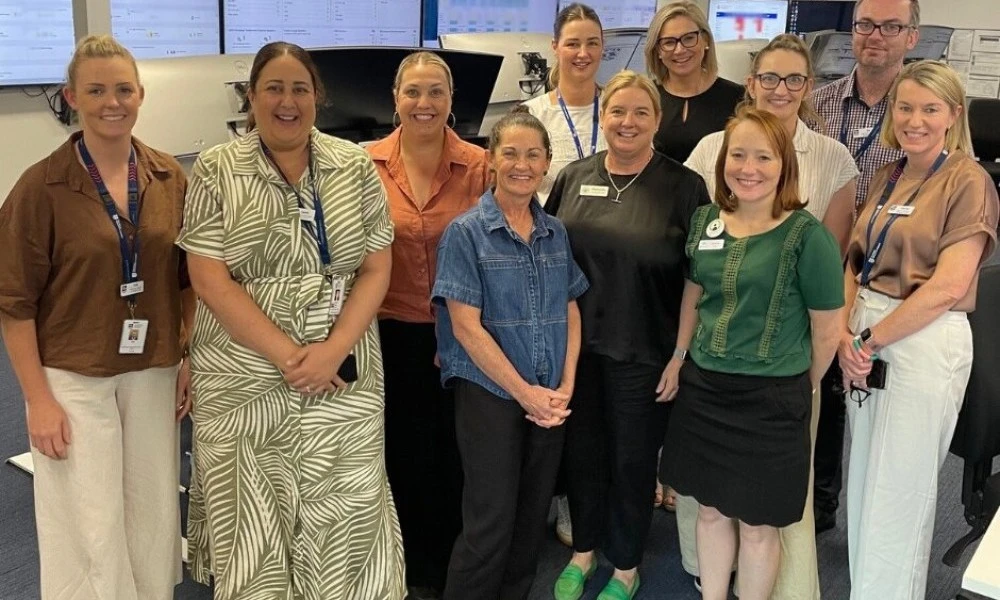
Representatives from hospitals across the Hume region visited the RMH in January, further strengthening the ongoing collaboration between the health services.
While visiting, attendees took part in tours, discussions and presentations focused on enhancing pathways for patients who require specialist care in Melbourne before returning to their local communities.
Director of Access and Patient Flow at the RMH, Sarah Aranha, said the meetings were an important step in continuing to build practical, solutions focused relationships across the region.
“Back in August, we started weekly huddles with these hospitals with the aim of building a shared understanding of access and flow across our health services, and the aim of improving timely access to care for regional Victorians,” Ms Aranha said.
“The weekly meetings mean that we have a real time avenue to plan complex transfers and learn about what is working well and where we have opportunities to improve these transitions for our patients.
“This is important for patients that need to access specialist services in Melbourne and, just as importantly, return to their local health service to be closer to their family and support networks as they recover.
“Getting to see those huddles grow into a day like this where we can all meet in person and share even more information has been truly incredible - and our team is looking forward to visiting the Hume region soon too.”
The positive impact of this partnership is already being felt by patients like Wodonga resident Christine, who experienced an acute stroke and was transferred to the RMH for emergency specialist care.
After receiving treatment, she was able to return to AWH to continue her recovery closer to home.
Christine and her family said the coordination between the hospitals made a stressful situation easier to navigate, with clear communication and efficient planning ensuring she could return home as soon as it was safe to do so.
“Considering the circumstances, the experience at the hospital has been wonderful,” she said.
“The nurses and doctors have all been extremely helpful, and my family have been included every step of the way.”
Christine’s story is one of many and reflects the purpose of the weekly access and flow huddles: ensuring patients who need specialist metropolitan care can receive it quickly, and then safely return to their regional communities without unnecessary delay
Weekly meetings between the services will continue throughout 2026, and plans for a regional visit is in the pipeline as the partnerships continue to strengthen.
We provide a media service from 6am to 9pm each day. Journalists are welcome to contact our media adviser on-call via the RMH Switchboard on (03) 9342 7000.
During business hours, journalists can email mh-communications@mh.org.au. We do not respond to emails outside business hours.