

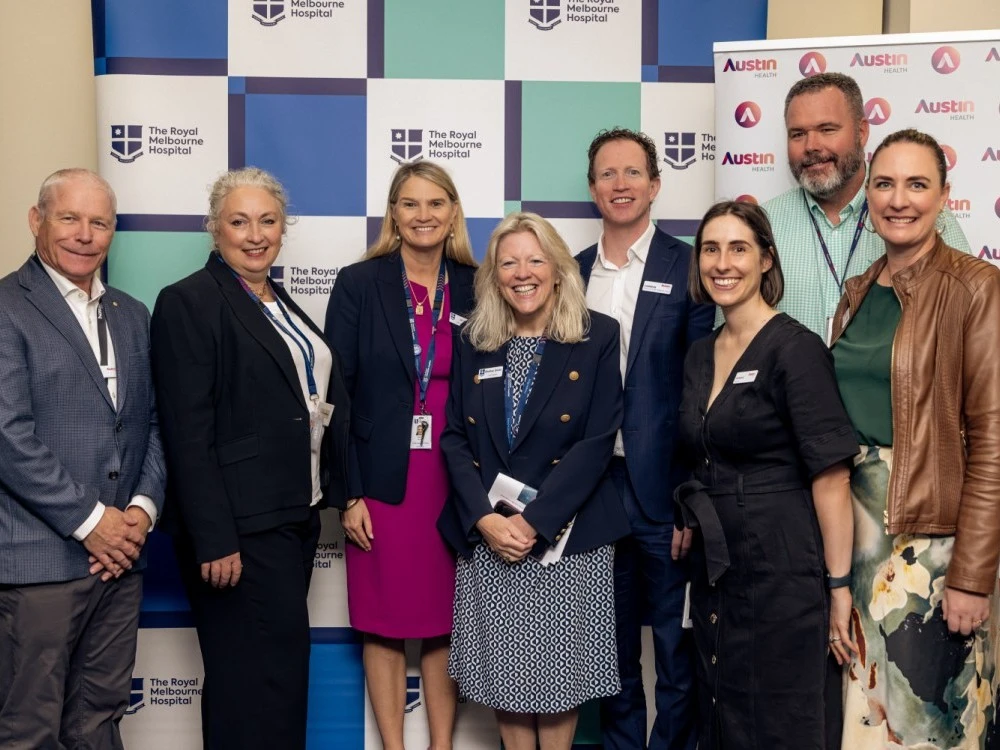
Victoria’s landmark Virtual Hospital project – led through a partnership between the Royal Melbourne Hospital (RMH) and Austin Health – is helping patients across the state receive treatment and care from the comfort of their home.
The virtual model is already delivering better outcomes for patients, including Linda Vella, who was recently treated as part of the RMH’s virtual ward after undergoing triple bypass heart surgery.
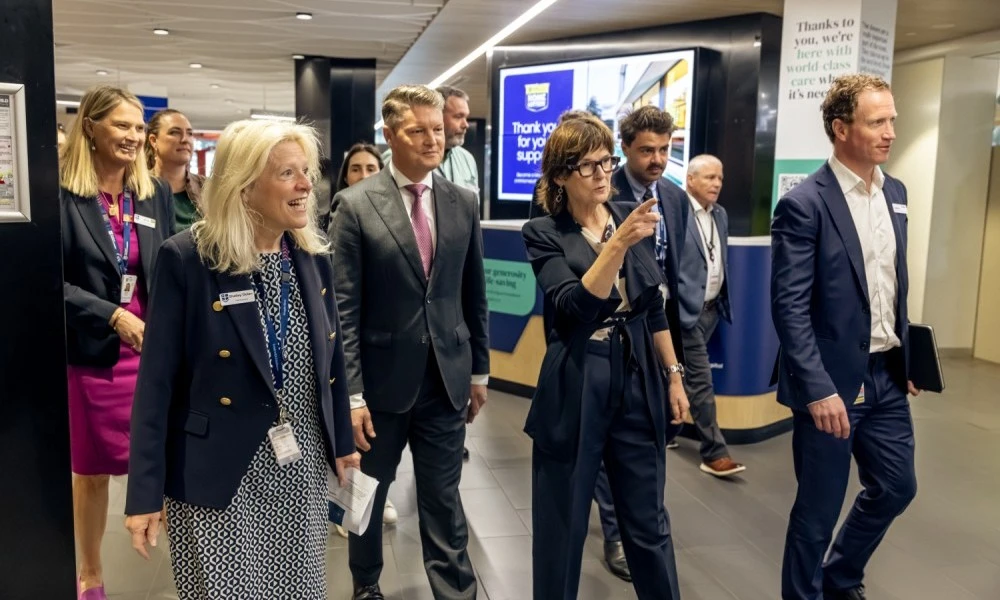
The success of the project, and the exceptional treatment patients are receiving, was recognised by Acting Premier Ben Carroll and Minister for Health Mary-Anne Thomas on a visit to the RMH.
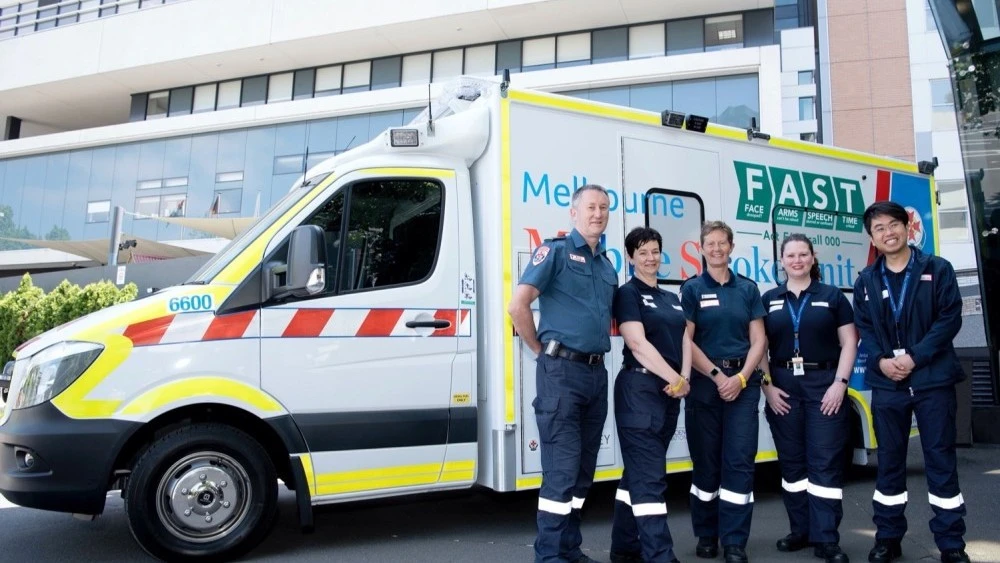
Minister Carroll and Minister Thomas also highlighted the next phase of the pilot, which will see greater supports for services in regional Victoria and a dedicated member of Ambulance Victoria based within the RMH’s Digital Coordination Centre (DCC) to support ambulance and health service capacity.
Acting Premier Ben Carroll said the new model of care was providing world-class care to patients across Victoria, from the comfort of their own homes.
“The Virtual Hospital pilot is saving Victorians time and money – providing safe, world class care at home.”
“We’re freeing up hospital beds for those who need them most.”
At the RMH, the virtual ward is supporting patients with heart failure and those recovering from cardiac surgery, such as Linda, who would otherwise need a hospital stay, to recover safely at home.
Instead of being admitted to hospital for an extended period, eligible patients are offered to continue their recovery at home with wearable monitoring devices that track vital signs and progress.
That data is securely shared to the patient's hospital record so care teams can monitor them in real time. Patients who opt-in to the service also receive a daily virtual check-in with hospital staff – ensuring careful clinical oversight without the need for a hospital stay.
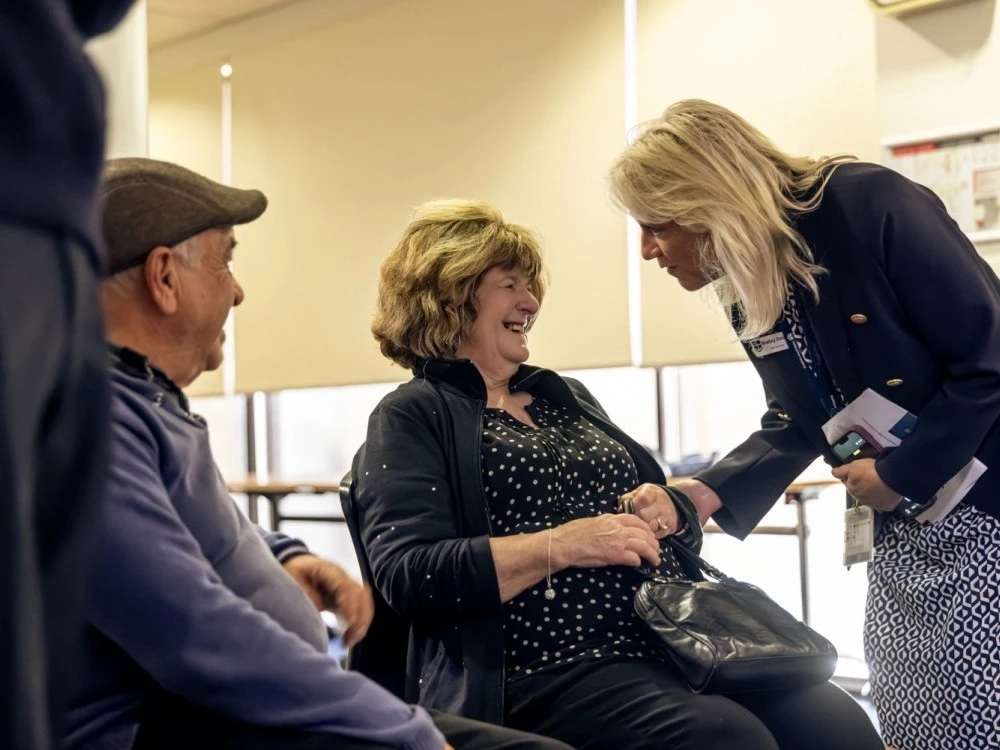
The service meant that Linda, in her 70s, was able to return home just days after complex coronary bypass surgery, supported by the RMH’s virtual ward and remote monitoring technology.
Instead of remaining in hospital for extended observation, she continued her recovery safely at home alongside family while clinicians monitored her vital signs in real time through connected
"At home they would call me every morning [to check in], I was still an inpatient - the doctor, nurse, the physio,” Linda said.
“They were wonderful and answered any questions I had. I was happy to be in my own home with my husband and my daughters visiting.
"I just can't speak highly of them [the RMH team]. They're just wonderful. I’m just so grateful for all of them.”
The virtual ward is the latest step in the Virtual Hospital Pilot program and builds on initiatives including a virtual foetal medicine service, delivered in partnership with the Royal Women's Hospital, and virtual ward rounds for regional neurology and haematology patients.
Victoria’s Virtual Hospital Pilot is a six-month program delivered in partnership by the RMH and Austin Health and supported by a $3 million investment from the Victorian Government.
The program provides hospital-level care to patients in their own homes through a virtual model, supported by a multidisciplinary specialist team.
It enables people across metropolitan, rural and regional Victoria to access expert care at home, while helping to reduce pressure on hospital beds.
We provide a media service from 6am to 9pm each day. Journalists are welcome to contact our media adviser on-call via the RMH Switchboard on (03) 9342 7000.
During business hours, journalists can email mh-communications@mh.org.au. We do not respond to emails outside business hours.