

Roger is a patient at the RMH Diabetes and Endocrinology services, which has been recognised by the National Association of Diabetes Centres as a Centre of Excellence.
I was born in 1960 and grew up on a farm on the Mornington Peninsula, back when life was measured by seasons, weather, and hard work. We didn’t think much about resilience then – it was simply expected. If fences broke, you fixed them. If the weather turned bad, you adapted. If things got hard, you kept moving.
That mindset would shape the rest of my life.
By the mid-1990s I was working in outdoor education, a career that suited me perfectly. I loved wild places, physical challenges and helping people discover they were capable of far more than they believed. Over the years I gained instructor and advanced skills certifications in canoeing, rock climbing, mountaineering, skiing, surfing, SCUBA diving and heavy vehicle driving. I was happiest outdoors – on rivers, oceans, mountains or snowfields.
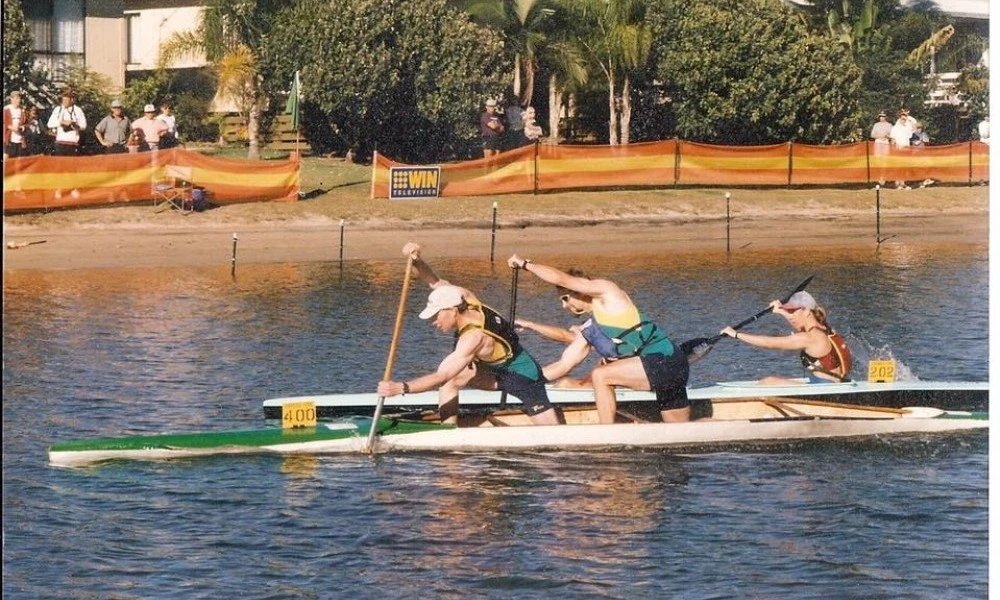
Canoeing had become a major part of my life. I competed at an elite level and eventually represented Australia in marathon canoeing for 10 years. I also coached others at an elite level. In 1996, I was at the peak of my fitness – four-time national champion and training hard for the World Championships in Sweden.
Then came the diagnosis.
Type 1 diabetes.
I still remember the shock of hearing those words.
One day I was an elite athlete preparing for international competition; the next I was being told I had a lifelong condition with risks, restrictions and warnings attached to it.
But after the initial hit, I did what I’d always done.
I got on with things.
I learned how to manage the condition, adapted where I had to, and kept competing through to 1999. I chased the dream of qualifying for the Sydney Olympics in sprint canoeing and came close 2 seconds over 500m, though not quite close enough. That disappointment stung, but diabetes wasn’t the reason I missed out. Sport is brutal at the elite level.
The greater challenge wasn’t the condition itself.
It was the reaction to it.
Throughout my years in outdoor education, I had tremendous support from schools, parents and colleagues. I told the people who needed to know, but I never felt the need to announce my condition to the world. Diabetes was something I managed; it wasn’t my identity. Risk management simply meant identifying the hazards, determining the level and putting controls in to lower the risk to acceptable.
Later, when I transitioned into a career as a National Park Ranger, the barriers started appearing.
I began hearing phrases like “contraindicated” and “risk profile.” Suddenly people who had never met me, never seen me work and knew nothing about how I managed my health were deciding what I supposedly could not do.
SCUBA diving? Too risky.
Antarctic work? Not suitable.
Firefighting? Contraindicated.
To say this infuriated me would be an understatement.
Working closely with doctors who actually knew me, I managed my condition carefully and responsibly. I monitored my blood sugars, understood the risks and took accountability for my own health. But I also made a conscious decision; apart from Antarctic deployment, I would continue doing the things I was trained, experienced and capable of doing. I did always have lollies in my pocket as the lows are biggest risk in regard to all these activities.
I continued working, leading teams, driving heavy vehicles, diving, firefighting, sailing and living a full life.
I was awarded the National Emergency Services Medal following the Black Saturday bushfires. It remains one of the proudest recognitions of my career, not because of the medal itself, but because it represented service, teamwork and commitment during some of the darkest days many communities had ever experienced.
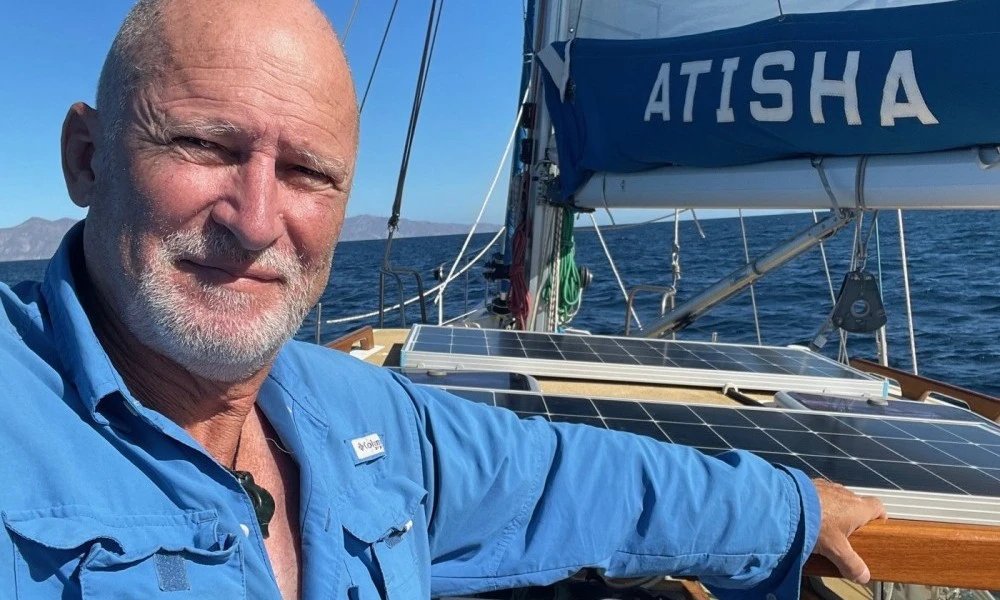
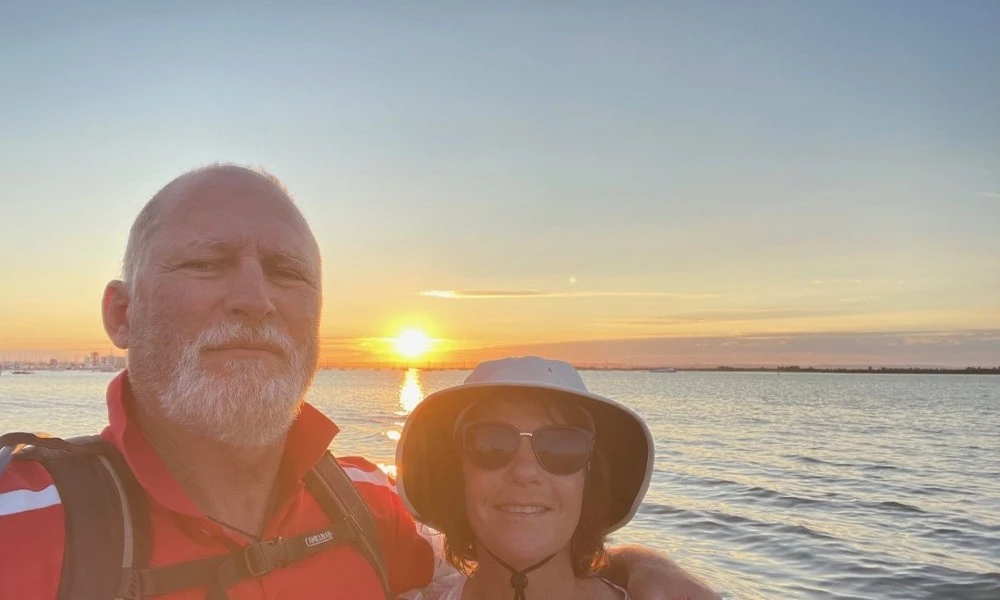
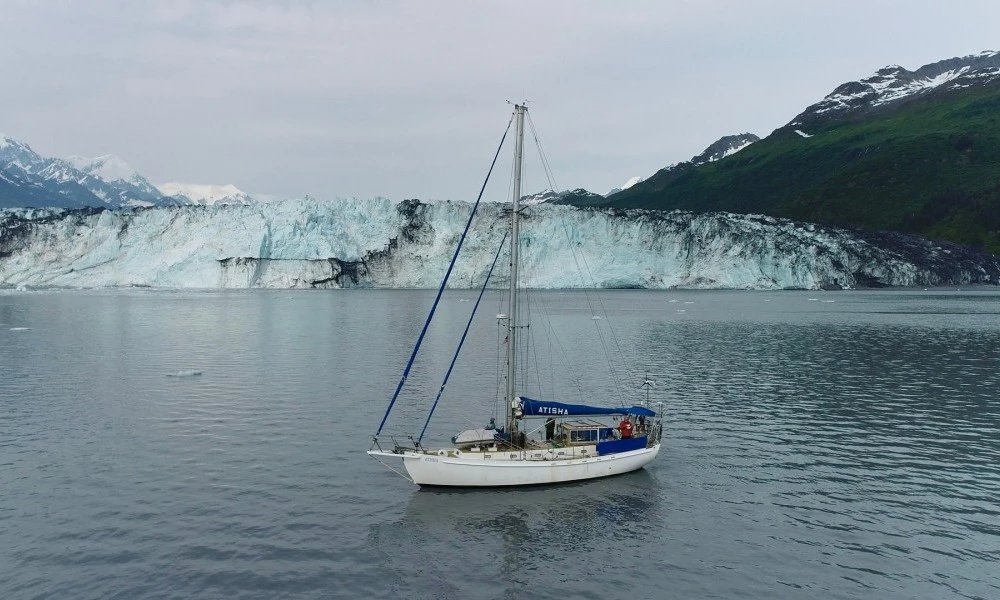
For the past five years, my wife and I have sailed a Pacific “Ring of Fire” route,aboard our 43-foot steel yacht, Atisha from New Zealand, Fiji, Micronesia, Japan, Aleutians, Alaska, Canada, US west coast, Mexico and back through the South Pacific (where I’m writing this on route to Tonga) once again proving – mostly to ourselves – that diabetes did not get to dictate the boundaries of our lives.
Managing Type 1 diabetes at sea requires preparation, discipline and adaptability. Then again, so does sailing.
The humour in all of this is that my mates eventually became very aware that travelling with a diabetic has advantages. Diabetics are never far from emergency sugar.
Hence the title of this memoir:
My Mates Ate My Lollies.
Over the years, countless snakes of jellybeans, glucose tablets and emergency sweets mysteriously disappeared from backpacks, glove boxes and yacht lockers. Apparently, everyone else’s “low blood sugar emergency” coincidentally occurred around movie nights and long car trips.
I remain deeply grateful to the doctors and diabetes educators who helped me navigate this journey properly and responsibly. Good clinicians empower people rather than frighten them.
Too often, people with Type 1 diabetes are defined by fear-based assumptions rather than modern understanding and objective data.
But there are many of us out here quietly managing diabetes and other chronic conditions while living full and adventurous lives. Elite athletes. Sailors. Divers. Pilots. Emergency workers. Parents. Leaders.
People who prepare carefully, manage responsibly and refuse to surrender their ambitions.
Those stories deserve to be elevated too.
As I return from our sailing adventures, I suspect advocacy may become the next chapter of my life. Not because I want attention, but because I want future generations diagnosed with Type 1 diabetes to hear something more useful than limitation.
I want them to hear possibility.
Diabetes is serious. It deserves respect and disciplined management. But it should not automatically condemn people to smaller lives.
If anything, living with it has made me more organised, more self-aware and more determined.
And after all these years – from the farm on the Mornington Peninsula to world championships, bushfires, national parks, Aboriginal corporations and oceans across the Pacific – I still believe the same thing I learned as a kid:
You assess the conditions.
You prepare properly.
Then you get on with it.
We provide a media service from 6am to 9pm each day. Journalists are welcome to contact our media adviser on-call via the RMH Switchboard on (03) 9342 7000.
During business hours, journalists can email mh-communications@mh.org.au. We do not respond to emails outside business hours.