
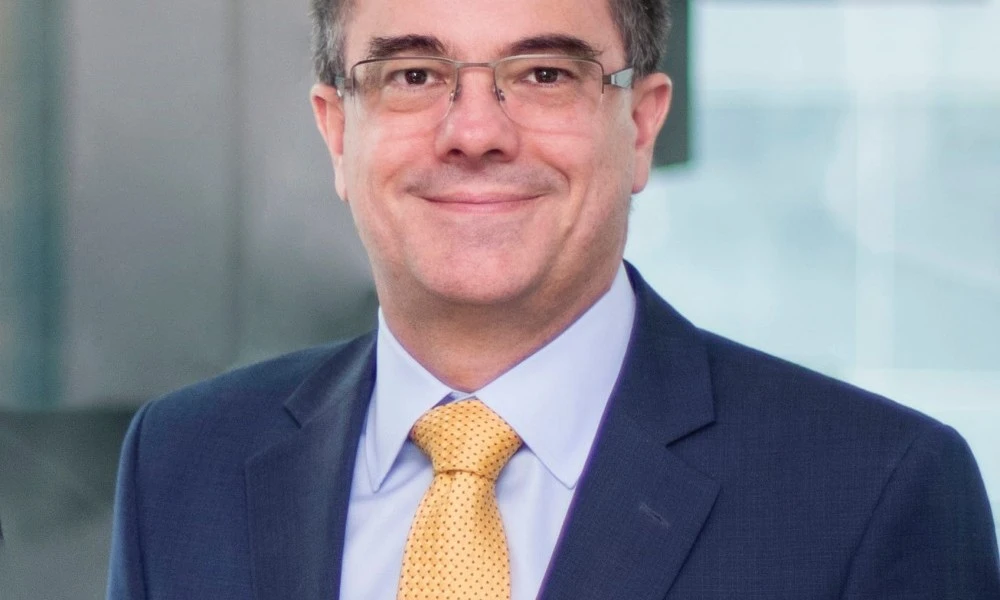
The Royal Melbourne Hospital’s (RMH) Professor Andrew Roberts has been awarded the prestigious Helen M. Ranney Clinical and Translational Science Medal from the American Society of Hematology (ASH), recognising his outstanding contributions to blood cancer research and patient care over many years.
The medal is named in honour of Dr Helen M. Ranney, a pioneering physician-scientist whose groundbreaking research transformed understanding of sickle cell disease and inherited blood disorders, while also breaking barriers for women in academic medicine.
The medal is awarded each year to senior investigators whose work has made a significant and lasting impact on clinical and translational haematology research. Professor Roberts, a Clinical Haematologist at the RMH since 1998, said he was humbled by the recognition.
“I feel very honoured to be recognised as someone who, like Dr Helen Ranney, has made a significant contribution to haematology,” Prof Roberts said.
Throughout his career, Professor Roberts has focused on improving outcomes for people with blood cancers that have limited treatment options.
“My clinical and laboratory research is focussed on generating better solutions for treating patients with poor prognosis blood cancers,” Prof Roberts said.
“This involves deciphering the biology to uncover new avenues for therapy, and then testing them in the lab and, when promising, in clinical trials.”
Among his most significant achievements has been his role in the development of a targeted therapy that has transformed treatment for patients with acute myeloid leukaemia (AML) and chronic lymphocytic leukaemia (CLL).
This was highlighted by leading the first-in-human venetoclax trial at the RMH in 2011, which has since informed over 500 subsequent studies worldwide and contributed to improved survival for many patients.
“I have been privileged to be part of great lab and clinical teams that came together to bring ideas through preclinical discovery and development that are now parts of routine practice and care for patients,” Prof Roberts said.
“Venetoclax has turned out to be a real game changer for patients with chronic lymphocytic leukaemia or acute myeloid leukaemia, and I am so proud that the first people in the world to benefit from this drug were treated here at the RMH."
In 2025, Prof Roberts was inducted into the RMH Research Hall of Fame, the hospital’s highest honour recognising outstanding careers and groundbreaking contributions to medical research.
We provide a media service from 6am to 9pm each day. Journalists are welcome to contact our media adviser on-call via the RMH Switchboard on (03) 9342 7000.
During business hours, journalists can email mh-communications@mh.org.au. We do not respond to emails outside business hours.